
Galveston Projected Versus Actual Release
A projected release date is a calculated state-prison planning field. TDCJ defines it as the date its Classification and Records Office projects an inmate will leave incarceration if parole does not occur sooner. The actual release date is the event later recorded when the person leaves that custody. Between calculation and release, credits, discipline, Board action, new legal process, or a record correction can move the estimate.
A scheduled release date is a later-stage TDCJ field. After release is scheduled, the detail screen may also show a scheduled location. TDCJ warns that the date can change even on the stated day. Galveston County pretrial detainees do not have this kind of fixed sentence date. Their exit depends on bond, a court order, disposition, transfer, or another lawful event.
Find Galveston Inmate Release Dates
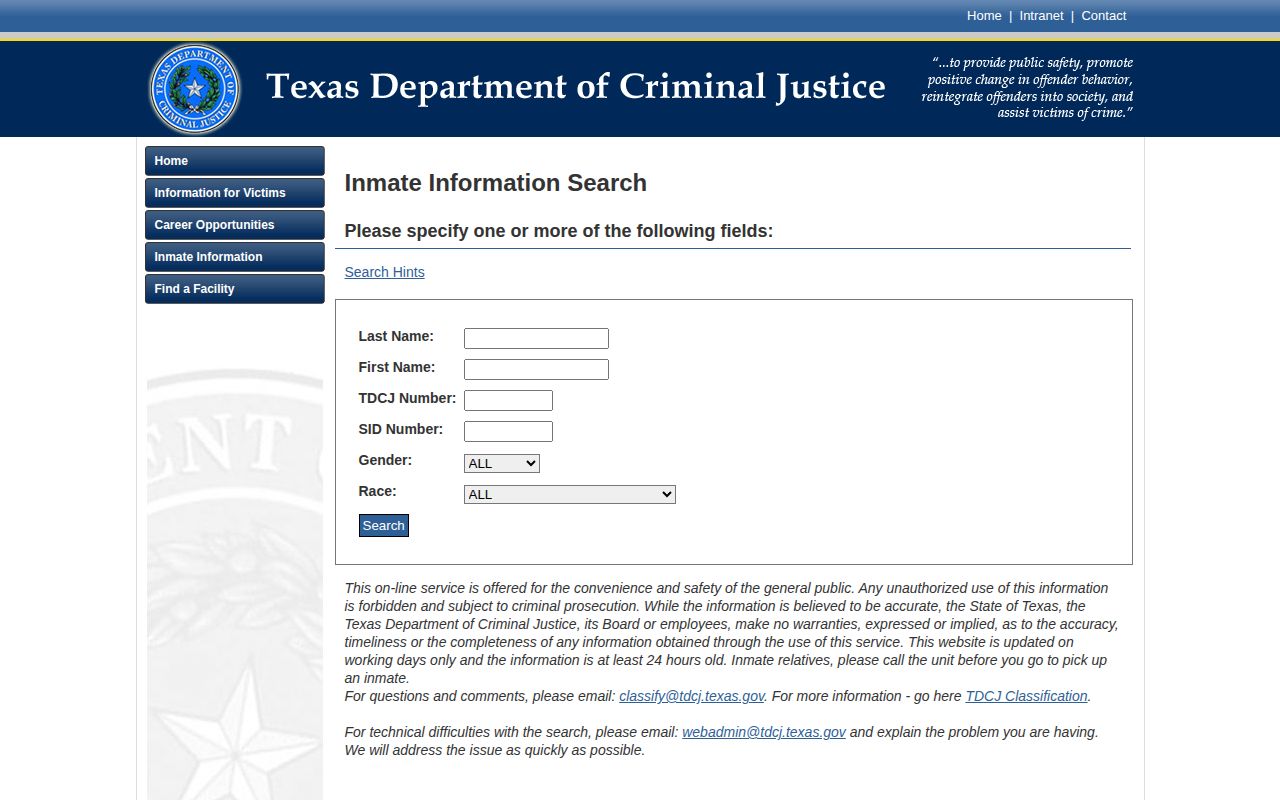
First identify the custodial system. A sentenced TDCJ prisoner belongs in the TDCJ Online Inmate Search. A person serving a county-jail term requires the judgment, commitment, jail-time credit, and GCSO calculation. A pretrial person may have no release date at all. Confusing these paths is the main cause of false date claims.
- Match the person by TDCJ number when available. With a name, verify age, offense county, and case facts.
- Read Projected Release Date separately from Maximum Sentence Date, Parole Eligibility Date, and any Scheduled Release Date.
- For a county sentence, obtain the judgment and commitment from the court, then ask GCSO Records for the public release calculation or final entry.
- Check for a detainer, transfer, new case, parole action, or court order that may change the route.
- On release, replace the estimate with the actual agency release or transfer record.
The Galveston County released-inmate record path shows how the jail event and court event fit together. P2C is a current inmate inquiry, not a past-release calendar. A disappearance from its list cannot supply an actual date, destination, or reason.
The state search interface helps locate the relevant TDCJ record:
Texas Credits and Galveston Release Dates
Texas Government Code Chapters 498 and 508 govern much of the state good-conduct and release framework. Good-conduct time is an administrative credit. It generally does not shorten the sentence itself, and its effect depends on eligibility and the release mechanism. Offense title, offense date, judgment findings, and Board action all matter.
For eligible offenses before September 1, 1996, flat time plus good time may reach the sentence calculation for mandatory supervision. For eligible later offenses, discretionary mandatory supervision also depends on BPP approval. A denial can move the projected date toward maximum expiration. For a person who is not eligible for mandatory supervision, the projected date may match maximum expiration unless parole occurs first.
Texas does not have one rule that every adult TDCJ prisoner serves 85 percent. Certain serious-offense parole rules under Government Code Chapter 508 can require calendar time equal to one-half of the sentence or 30 years, whichever is less, without good-time credit toward that threshold. Other offenses follow other rules. Exact dates require the judgment, offense date, and current TDCJ calculation.
Why Galveston Release Dates Move
A projected date can change in either direction. TDCJ reviews release plans, county-of-residence compliance, discipline, programs, legal calculations, and mandatory terms before issuing the certificate. Parole may lead to an earlier exit, while a denial or lost credit can produce a later one. The current record is more useful than an old screenshot.
| Factor | Possible effect |
|---|---|
| Good-conduct credit | Changes the eligible calculation where statute permits |
| Disciplinary action | May reduce credits or delay prerequisites |
| BPP decision | May approve earlier parole, impose conditions, or deny mandatory supervision |
| Detainer or hold | May send the person to another authority instead of the community |
| New sentence or court order | Can alter time owed and the legal release route |
| Record correction | Can change the calculation after review |
A favorable parole vote is not the same as physical release. Program completion, release planning, and certificate preparation can remain. A Galveston County jail release on a detainer is also not a free-community exit; it may be a handoff to TDCJ, another county, USMS, or ICE.
Confirm Galveston Actual Release Dates
For TDCJ information, compare the public detail with the inmate-information email or telephone channel when the screen is unclear. General locator information is available at 936-295-6371 or 800-535-0283. Parole review status before a vote uses 844-512-0461, while favorable-vote and release status uses 512-406-5202. Provide the identifiers required by TDCJ.
For Galveston County Jail, request the booking-out form, release or transfer order, and jail-register entry. The permanent jail register includes the date of release or transfer, while booking-out and release-order records have a minimum retention of release or transfer plus two years under the Texas State Library schedule. These are retention rules, not promises of online access or unrestricted disclosure.
A pending event can also be monitored through the Galveston VINELink release check. Treat an alert as notice, then verify with the agency's final record. Save both the time checked and the system name.
Galveston County Sentence Calculations
A county-jail sentence is not calculated through the TDCJ projected-date field. Begin with the signed judgment and commitment. Review the sentence, credit for time already served, concurrent or consecutive terms, and any lawful local credits shown by the records. GCSO must apply the controlling documents to its custody calculation.
Bond timing is different again. Galveston magistrations, bond conditions, payment, and paperwork can determine when pretrial release processing begins, but none creates a guaranteed jail-door time. GCSO says required payment or paperwork must be received and checked before the person enters the release queue. Ask for the actual release entry after the event.
Does Texas Require 85 Percent?
No single 85-percent shortcut controls Galveston County release dates. State-prison eligibility depends on the offense, offense date, sentence, judgment findings, credits, and the type of release being considered. Some serious cases use the half-sentence or 30-year threshold described in Chapter 508. Others do not.
County-jail terms remain separate. Their calculations arise from the county commitment and applicable local credit, not a copied TDCJ formula. Any estimate that lacks the source record and date checked should be treated as tentative.
Galveston Release Date Labels
TDCJ displays date labels that answer different questions. Projected Release Date is a calculation that assumes no earlier parole. Maximum Sentence Date is the endpoint of the sentence calculation. Parole Eligibility Date marks when review may become legally possible, not when release will occur. Scheduled Release Date can appear later, after TDCJ has arranged a release, and may be paired with a scheduled location.
Never merge these fields into one “out date.” Copy the label, value, and date checked. A past projected date without a released status needs follow-up because recalculation, another sentence, a detainer, or a reporting delay may explain the difference. A future date remains a plan, not an appointment for pickup.
TDCJ's inmate-information email can clarify the public fields at no charge when the required identifiers are supplied, though that channel does not furnish photographs. More complex records use the agency's Public Information Act process.
Galveston Release or Transfer Dates
The word “release” can mark the end of one agency's custody while another agency receives the person. Galveston County's permanent jail register includes release or transfer dates. Ask for the destination or receiving agency to the extent it is recorded and public. That field separates community release from a state, federal, immigration, medical, or other-county handoff.
This distinction is especially important in Galveston County because Hospital Galveston and the Carole S. Young Medical Facility are TDCJ sites. Departure from either medical facility can be an internal state transfer. It should not be interpreted through GCSO's county-jail calculation.
State-prison release logistics offer another clue but not a guarantee. TDCJ says releases generally occur on weekdays during its published daytime range, except holidays, and some groups release through Huntsville. Those state procedures do not apply to Galveston County Jail. Family pickup plans must be confirmed with the actual TDCJ unit and can change.
TDCJ also describes civilian clothing, trust-fund balances, bus vouchers where applicable, and different statutory release-fund amounts by release class. Those details may help confirm that a planned event is a true state-prison discharge or supervised release. They must not be copied onto a county detainee's timeline.
When a date moves, ask which field changed and why the source is authorized to say so. A court clerk can provide the order, GCSO can provide the county release or transfer record, TDCJ can explain its displayed dates, and BPP can clarify a parole decision. No single office owns every part of the timeline.
Record the date and time of every check. Public screens change. A saved label with its source gives GCSO, TDCJ, the court, or BPP a clear question to answer and prevents an old estimate from being repeated as current fact.
Galveston court records can resolve the legal event behind a county date. Odyssey separates case search from hearing search and uses terms such as dismissed, disposed, probation, jail-time credit granted, transferred, and warrant issued. Those labels describe the case, not the jail exit. Pair the signed judgment and relevant docket entry with the GCSO register or booking-out record.
Personal bond timing illustrates the difference. A judge orders personal bond, and the county's Personal Bond Office operates at the jail. Yet the order does not equal physical exit. GCSO must receive the required paperwork, check identity and documents, and process the person through its release queue. The final jail record supplies the actual time.